


ProcureOne's The Next Generation Survey
Introduction
Having worked in the Procurement space for over 10 years, I have seen a lot of commentary, articles, speakers, training guides etc from Procurement leaders like CPO’s and Procurement Directors (which is what I would expect), but I have noticed that we don’t often hear from those who are earlier on in their Procurement careers, who are ‘up and coming’ and our Procurement leaders of the future.
Maybe more junior Procurement professionals don’t feel ready to share their thoughts as often, don’t feel qualified to do so or merely not asked the questions?
I want to give a voice to those people and understand much more about their feelings and thoughts about Procurement as a profession. I surveyed Procurement Buyers, Specialists, Business Partners, Advisors and Category Managers, with less than 10 years experience.
Hopefully this will be interesting and insightful and give us some takeaways about the future landscape.
This is ProcureOne’s The Next Generation Survey!
Section A – Career Motivations and Experience
Section B – Development & Perception
Section C – The impact of Technology & AI
Section D – The Future / Advice & Guidance
SECTION A – Career Motivations & Experience
In our survey of junior procurement professionals, we asked:
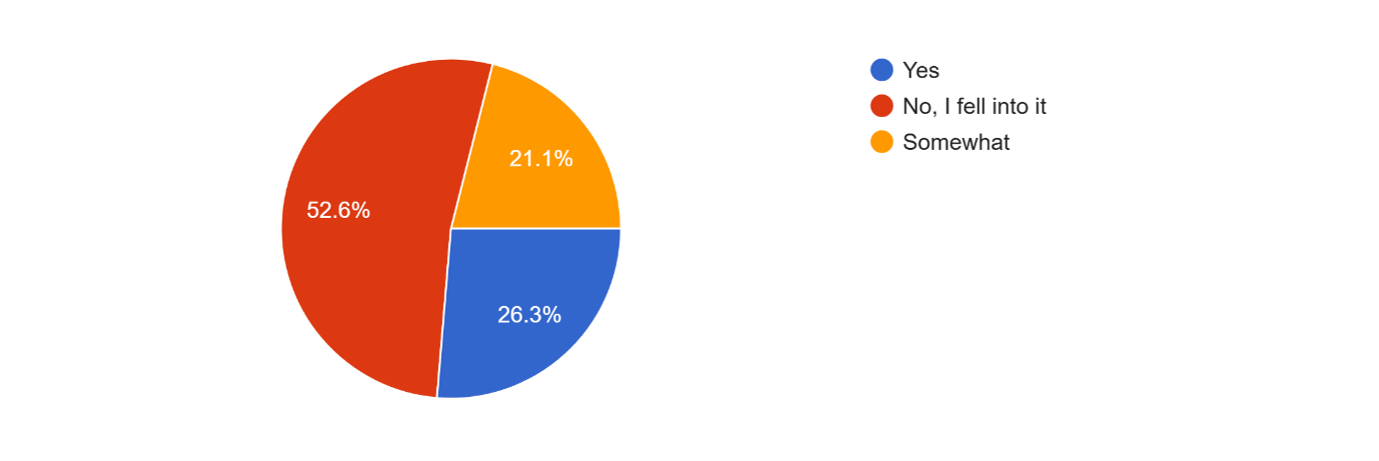
Did you intentionally choose Procurement as a career?
We hear time and time again that many people just fall into Procurement as a profession. We can see that has happened with over half our respondents.

What Initially attracted you to the Procurement Profession?
25% Career path / education / grad scheme (fell into it via a structured route)
20% Strategy & negotiation interest
15% Variety & dynamic nature of the role
10% Commercial impact / working with senior stakeholders
10% Applied for a job, not a deliberate choice ("got lucky")
5% Family influence
5% Genuine early interest in supply chain/logistics
5% Money
5% External/macro factor (COVID exposed the value of procurement)
Around 25% did decide to pursue a career in Procurement via a formal or structured route like a graduate scheme.
“It was one of my rotations on my grad scheme, I enjoyed it and had a great manager who showed me what sort of career it could be”
“I saw a job being advertised for a recent grad with my education background for a great company, and so applied. It was for a procurement graduate role, so initially it was the company that got me in to procurement”
A fairly large number were attracted to the strategic elements of the role and had an interest in negotiation, around 20% felt this was something which was a motivator to continue in their role
The ‘variety’ a Procurement role can offer, also proved to be a big draw, with around 15% answering that they liked the breadth and scope their role offered.
“The variety of the engagements and business teams you help as well as the commercial aspect (which having landed a grad role in the public sector I was seeking and a limited amount of teams had that aspect)”
Around 10% commented that they liked the opportunity Procurement gave them to work with Senior stakeholders.
There were lots of other reasons given, including
“family already worked in it”,
“for the money” and
“Seeing the impact of COVID on supply chains made me realize the value of Procurement and the increased role it could play in businesses moving forward. It seemed future proof”
What parts of Procurement did the respondents find most challenging?
Three main themes came across in the results.
Nearly 40% found Stakeholder Management & Engagement the most challenging aspect (early involvement, alignment, balancing competing priorities).
“One of the biggest challenges is balancing the expectations of multiple stakeholders while ensuring procurement governance is maintained. Different departments naturally have different priorities, such as speed, budget, quality or operational requirements, and procurement often has to bring those perspectives together to reach the best commercial outcome. I see this as a positive challenge because it develops communication, influencing and leadership skills, and ultimately leads to stronger decisions for the organisation”
Stakeholders not engaging with procurement early enough was a common complaint and we see this as a theme throughout Procurement, whichever level you operate at.
Just over 20% felt that Tendering & Sourcing process (RFPs, tenderer compliance, technical briefs) were the most challenging aspects of their role.
The final main challenges related to pace and time with frustrations including
“Repetitive and time consuming administration that block or slow down processes”.
“Tight time scales and tenderers not following instructions”
The geopolitical situation was mentioned a few times by our respondents and the impact this has on the supply chain and the blockers it causes.
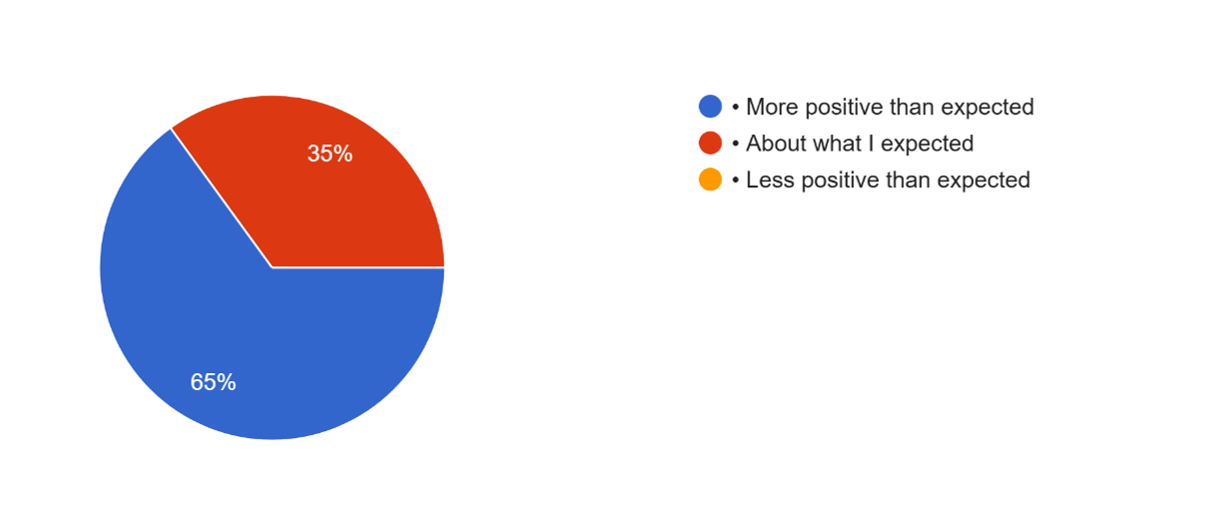
Has working in Procurement been what you expected?

SECTION B – Development & Perception
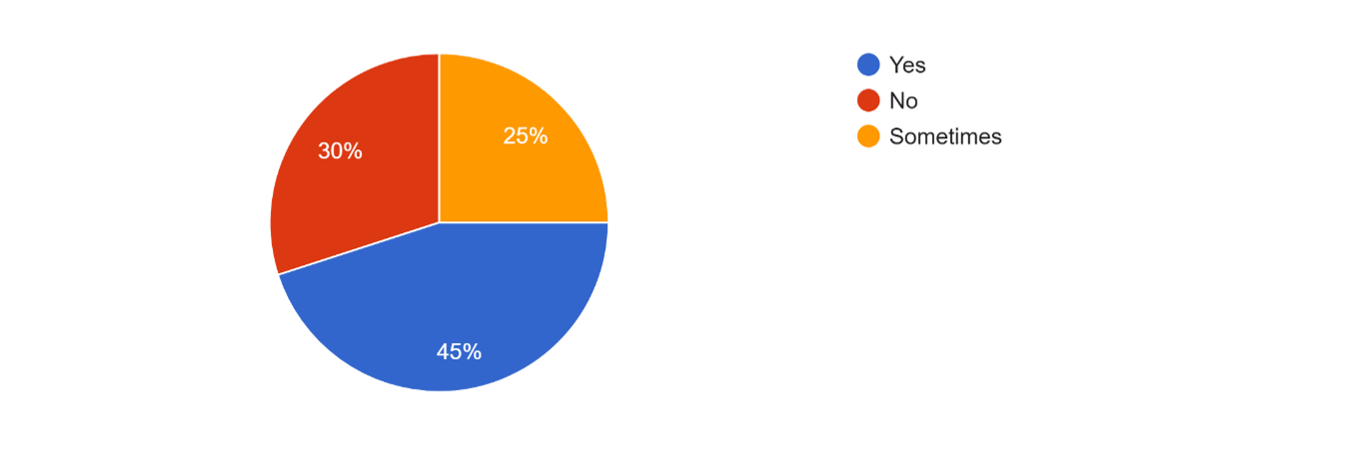
Do you feel junior procurement professionals receive enough training and development?
Feelings were mixed here. It really does depend where you work:

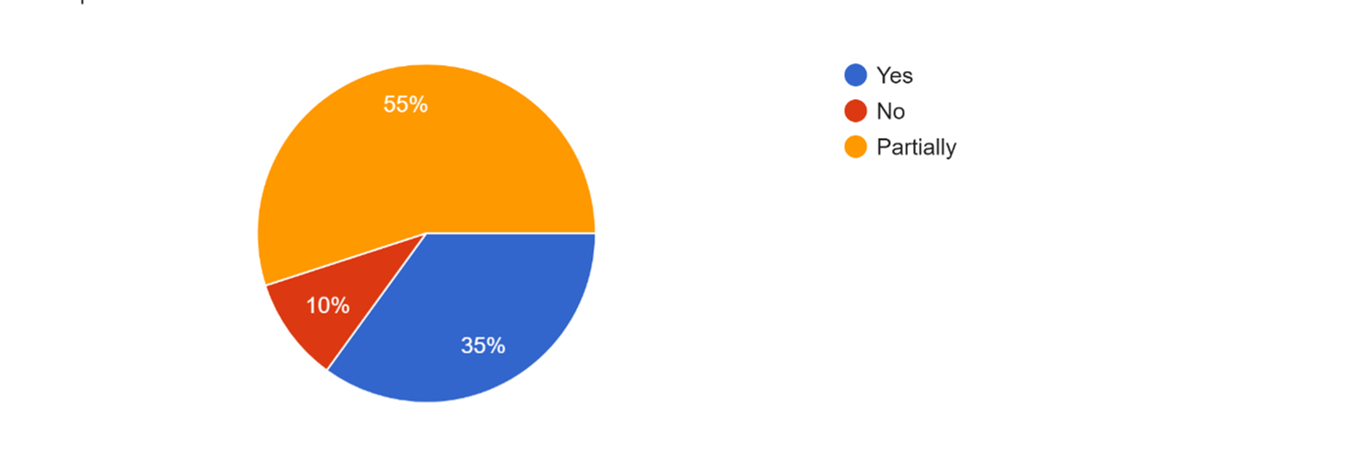
Do you believe procurement is well understood and valued within your organisation?
Again, we see a mixed picture. 35% indicating that Procurement is understood and valued and 55% feel partially. It’s promising to see only 10% felt Procurement is not well understood or valued.

SECTION C – The Impact of Technology Advancement and AI
Everywhere you look Senior Procurement individuals and business leaders / stakeholders are having conversations about Technology and AI. I wondered how Procurement individuals not in leadership roles felt about these changes and advancements and their thoughts around the overall impact they might have on their careers moving forward.
What impact do you think technology and AI will have on procurement roles over the next 3-5 years?
The dominant view (58%) is that AI will automate admin-heavy, repetitive tasks — freeing time for higher-value work. A significant secondary theme (37%) is that human skills like relationship-building and negotiation will remain irreplaceable.
“I believe the more administrative tasks such as purchase order raising will be obsolete and rather be reviewed, which will be great time saver. Could take over aspects such as tender analysis and solution solving from a support function perspective. Maintaining relationships will still be heavily human based aspect of the role, until the potential AI's can do so”
“We will see less admin based roles in procurement with streamlined & automated processes such as data entry and contract work.”
“I believe AI will transform procurement by automating routine tasks and enabling procurement professionals to focus on higher-value strategic work. Activities such as spend analysis, market research, contract reviews, supplier risk monitoring and sourcing recommendations will become faster and more data-driven. However, AI will not replace procurement professionals. The greatest value in procurement comes from commercial judgement, stakeholder management, negotiation and relationship building, which require human expertise. I see AI as a tool that enhances decision-making rather than replacing it.”
“AI will eliminate lots of our administrative tasks and provide efficiencies for routine operations. I hope the procurement professional will still be in the loop for decision making regardless of the level of purchase. As this is the key value add in our profession”
“Huge - I think it can help to speed up our processes especially evaluating tenders etc. however it can’t replace the human touch and negotiation”
A number of respondents did comment on the impact AI will have on entry level / junior talent and recruitment in the Procurement field.
“I worry for people that will be starting out at a more junior level as I think a lot of those roles will go and we will just see more senior strategic roles remain”
“You're already seeing it with the more day-to-day operational tasks being done partially or in full by AI with the focus shifting to more strategic work. Not just in procurement but across organisations this is reducing the pipeline of young talent coming in.”
We asked our respondents: Which areas of Procurement do you think are most likely to become automated?
There was consensus across the board:
The main themes were:
Contract Administration / Proposal Reviews / Supplier Onboarding / Document Drafting / PO Processing, / Spend Reporting / Supplier Due Diligence, RFx Document Generation / Market Research / Compliance
So how do these rapid advances in AI Tech make our respondents feel? We asked them:
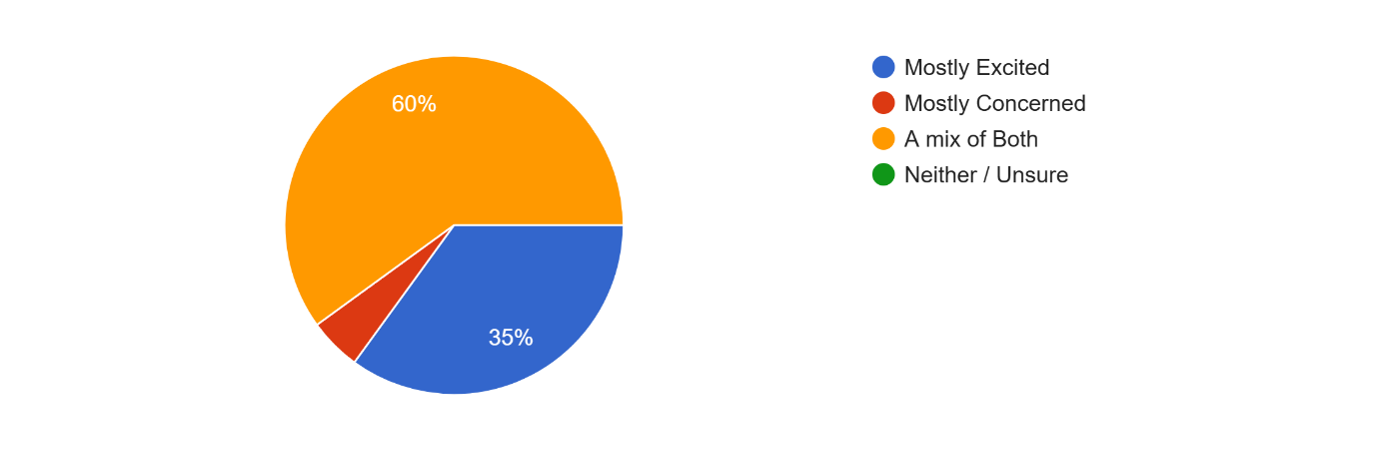
Are you excited or concerned about the impact of AI on your procurement career?
The results show

For 60%, feelings are still very mixed. Watch this space….
SECTION D – THE FUTURE / ADVICE & GUIDANCE
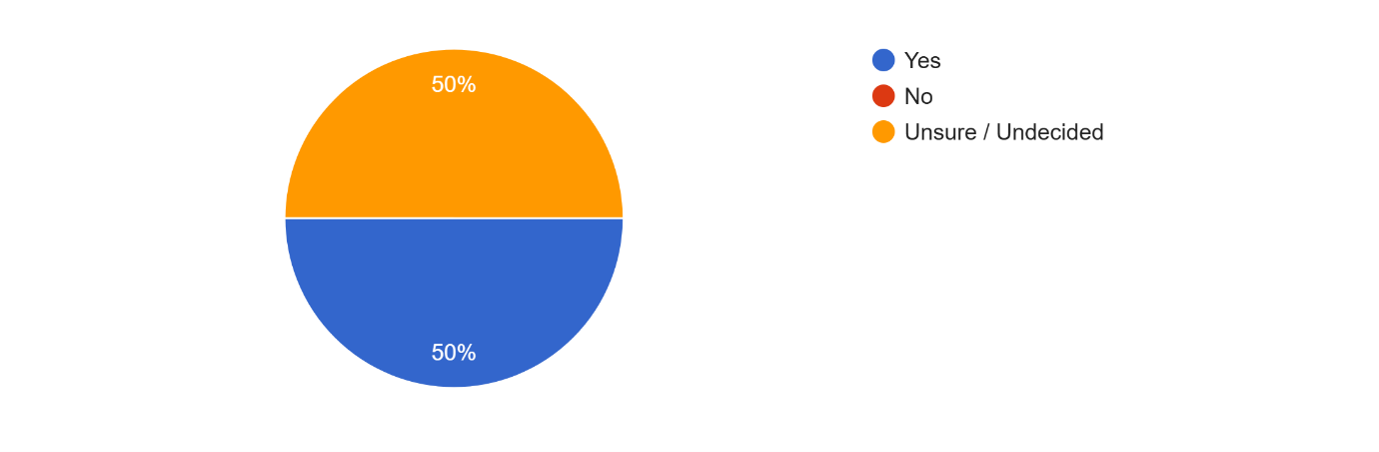
Feelings are also mixed when we asked:
Can you see yourself staying in Procurement long term?

To finish off our survey I wanted to know
What advice would you give someone considering a career in Procurement?
The clearest and most repeated advice is around stakeholder relationships and communication (33%) — being able to flex your style, build trust, and go beyond a transactional role.
Close behind is encouraging newcomers to see procurement as strategic, not just purchasing (22%). Together, these two themes capture over half the advice given.
“My advice would be to stay curious and build strong business acumen, not just procurement knowledge. Procurement is about much more than buying goods and services; it's about understanding how organisations operate, influencing stakeholders, managing risk and creating commercial value. Develop your communication and negotiation skills, embrace technology and AI, and always be willing to learn from suppliers and colleagues. If you focus on solving business problems rather than simply following processes, you'll build a successful and rewarding career in procurement.”
“You need to be willing to help out your stakeholders and go above your traditional scope in order to build a good relationship where they see you as a useful resource. Need to be able to manage a lot of moving parts and people constantly as well.”
“The career path is there. Complete your CIPS. Have a can do attitude, you learn from your failures and they are sure to come”
“Procurement can be challenging at times, it is important to remember that some things are out of your control and to not dwell on situations where there was nothing more you could do. The procurement space is continuing to grow and there will be many opportunities for those who work hard and stay patient”
“Be prepared for tough conversations!”
“Show value in procurement as much as possible and don't become just a purchase order raiser”
“It is a very rewarding role but be prepared to master both the hard and soft skills to excel”
“It's so much wider than you think - look beyond purchasing and cost saving!”
I hope you enjoyed the highlights from ProcureOne’s survey – The Next Generation.
I’d really like to hear your thoughts and comments!